A Little Political History
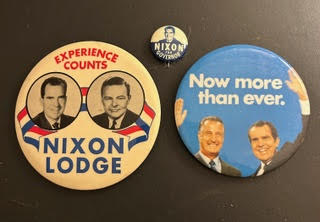
While the 1960s were known politically for the Kennedys, it was, without a doubt, the decade of Nixon as well. In 1960, Vice President Nixon stepped out from President Eisenhower’s shadow and became the Republican Party nominee for President.
He picked UN Ambassador and former Senator Henry Cabot Lodge of Massachusetts as his running mate. Nixon lost that race in a squeaker to JFK. He then lost in his bid to become Governor of California in 1962.
Most people thought Nixon wouldn’t emerge from two massive defeats in two years, but six years later, he took on a bevy of Republican challengers and won the nomination. The Democrats were a split ticket, and Nixon came up the middle to take the prize he so desperately wanted. Only Watergate would undo him another six years later.
Background
Richard Milhous Nixon was the 37th president of the United States (1969–1974) and remains one of the most controversial figures in American history. His presidency had accomplished significant foreign policy achievements, but ended in disgrace with the Watergate scandal.
Born in 1913 in California, Nixon built a political career as a strong anti-communist, serving in Congress and as vice president under Dwight D. Eisenhower (1953–1961). After losing the 1960 presidential election to John F. Kennedy, he made a comeback, winning the presidency in 1968.
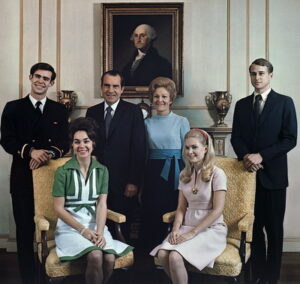
Nixon’s most significant accomplishments were in foreign policy. He improved U.S.-China relations and pursued détente with the Soviet Union, leading to arms control agreements. He also ended U.S. involvement in the Vietnam War through “Vietnamization,” where he implemented a peace through strength policy, withdrawing US troops gradually instead of all at once, as he believed it would make America look weak. Domestically, Nixon established the Environmental Protection Agency (EPA) and enforced school desegregation.
Ironically, the relationship with China is currently taking a turn for the worse, as President Trump is presently in a tariff war with the communist regime. Hopefully, a deal will be worked out, and this bottleneck with China will loosen.
In 1972, operatives linked to his campaign were caught breaking into Democratic offices. Investigations revealed Nixon’s involvement in covering up the crime. Facing impeachment, he resigned on August 8, 1974, becoming the first U.S. president to do so. His successor, Gerald Ford, later pardoned him.
❌ What Nixon Did Wrong – The Breakdown
Watergate Scandal
-
-
The most talked about scandal of the decade or even century. Nixon approved and attempted to cover up a break-in at the Democratic National Committee headquarters.
-
He outright lied about the corruption he knew about; specifically, Watergate, illegal wiretaps, and the use of federal agencies against political enemies. This eroded public trust within the American public, which further led to his demise.
- Secretly expanded the war into Cambodia and Laos without Congressional approval.
-
Nixon was the only U.S. president to resign from office in order to avoid possible impeachment and removal.
-
-
✅ What Nixon Did Right
Foreign Policy Wins
Although Nixon failed due to corruption, he was a die-hard patriotic American, and his time in office led to significant accomplishments.
-
-
-
Opened diplomatic relations with China (1972)
This is one, if not the highest, accomplishment. He essentially erased the tensions of the Cold War and paved the way for modern U.S.-China relations. How can you ignore 1.7 billion people was his rationale. -
Detente with the Soviet Union
He signed the SALT I treaty to limit nuclear arms. -
Ended American involvement in the Vietnam War
Under enormous political and public pressure, Nixon gradually withdrew U.S. troops and transferred combat to South Vietnamese forces.
-
-
-
-
-
Established the Environmental Protection Agency (EPA)
A significant move in federal environmental protection is still in existence to this day. -
Desegregated Southern schools
Despite the racial upheaval in the mid-1960s, Nixon made more progress in school desegregation than any previous president.
-
-
Despite his achievements, Nixon’s legacy was tarnished by Watergate, which damaged public trust in the government. While his foreign policy shaped global relations, his presidency served as a warning about the consequences of political corruption.